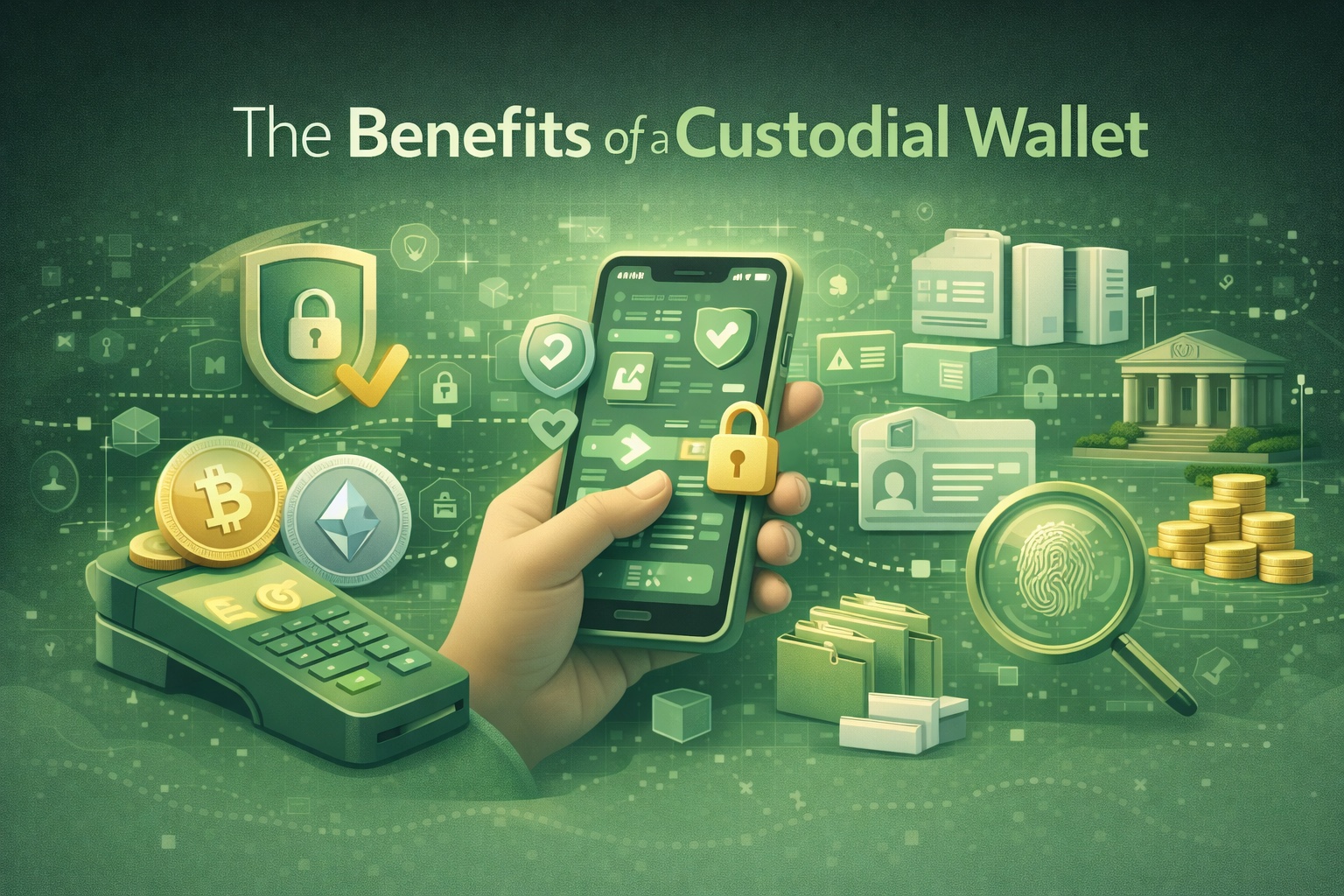
The Benefits of a Custodial Wallet
Why it’s important to choose a secure crypto wallet?
Lorem ipsum dolor sit amet, consectetur adipiscing elit lobortis arcu enim urna adipiscing praesent velit viverra sit semper lorem eu cursus vel hendrerit elementum morbi curabitur etiam nibh justo, lorem aliquet donec sed sit mi dignissim at ante massa mattis.
- Neque sodales ut etiam sit amet nisl purus non tellus orci ac auctor
- Adipiscing elit ut aliquam purus sit amet viverra suspendisse potent i
- Mauris commodo quis imperdiet massa tincidunt nunc pulvinar
- Adipiscing elit ut aliquam purus sit amet viverra suspendisse potenti
How do I know how secure is my wallet?
Vitae congue eu consequat ac felis placerat vestibulum lectus mauris ultrices cursus sit amet dictum sit amet justo donec enim diam porttitor lacus luctus accumsan tortor posuere praesent tristique magna sit amet purus gravida quis blandit turpis.

Are there any other risks I should take account for?
At risus viverra adipiscing at in tellus integer feugiat nisl pretium fusce id velit ut tortor sagittis orci a scelerisque purus semper eget at lectus urna duis convallis. porta nibh venenatis cras sed felis eget neque laoreet suspendisse interdum consectetur libero id faucibus nisl donec pretium vulputate sapien nec sagittis aliquam nunc lobortis mattis aliquam faucibus purus in.
- Neque sodales ut etiam sit amet nisl purus non tellus orci ac auctor
- Adipiscing elit ut aliquam purus sit amet viverra suspendisse potenti
- Mauris commodo quis imperdiet massa tincidunt nunc pulvinar
- Adipiscing elit ut aliquam purus sit amet viverra suspendisse potenti
“Nisi quis eleifend quam adipiscing vitae aliquet bibendum enim facilisis gravida neque velit euismod in pellentesque massa placerat”
Wrapping up: Crypto is a great wallet for you
Eget lorem dolor sed viverra ipsum nunc aliquet bibendum felis donec et odio pellentesque diam volutpat commodo sed egestas aliquam sem fringilla ut morbi tincidunt augue interdum velit euismod eu tincidunt tortor aliquam nulla facilisi aenean sed adipiscing diam donec adipiscing ut lectus arcu bibendum at varius vel pharetra nibh venenatis cras sed felis eget.
The Benefits of a Custodial Wallet
Why Simplicity, Security, and Operational Structure Are Often Discussed in Digital Asset Custody
Introduction
In the early years of cryptocurrency, a common phrase circulated widely across the industry: “Not your keys, not your coins.”The phrase reflected a core philosophy of early blockchain communities that emphasized individual control of private keys and fully decentralized systems.
As the digital asset ecosystem has expanded, however, the conversation has also broadened. Today, participants range from individual users and developers to financial institutions, enterprises, and governments exploring blockchain technology.
Within this evolving environment, custodial wallets have emerged as one of several approaches to managing digital assets. While some users prefer full self-custody, others rely on custodial services that manage private keys on behalf of users within structured operational and regulatory frameworks.
What Is a Custodial Wallet?
In general terms:
• A non-custodial wallet allows individuals to control and store their own private keys. Responsibility for access and security remains entirely with the user.
• A custodial wallet involves a third-party service provider that stores and manages private keys on behalf of the user.
These models reflect different approaches to digital asset management. Each approach carries its own advantages, trade-offs, and risk considerations depending on the user’s experience, needs, and regulatory environment.
1. Simplicity and User Experience
Managing private keys, seed phrases, hardware wallets, and cold storage systems can be technically complex for many users.
Some custodial wallet services attempt to simplify this experience by providing account recovery tools, user support services, and integrated security monitoring. These features may help reduce certain operational challenges for individuals or organizations that are less familiar with blockchain infrastructure.
For some users, these services can provide a more familiar experience similar to traditional financial platforms. However, reliance on third-party custody introduces its own considerations regarding trust, security practices, and regulatory oversight.
2. Security Infrastructure
Digital asset security remains a significant concern across the blockchain ecosystem. Loss of private keys, phishing attacks, and software vulnerabilities have historically contributed to asset losses in both custodial and non-custodial environments.
Some custodial providers implement structured security practices such as:
• Multi-signature authorization frameworks • Cold storage systems designed to keep assets offline • Continuous monitoring of transactions and access activity • Internal risk management procedures
The effectiveness of these measures varies by provider, and users must evaluate the operational standards and reputation of any service provider before relying on a custodial solution.
3. Regulatory and Compliance Structures
As digital asset markets intersect more frequently with traditional financial systems, regulatory considerations have become increasingly important.
Certain custodial providers operate within regulatory frameworks that may include:
• Know-Your-Customer (KYC) identity verification • Anti-Money-Laundering (AML) transaction monitoring • Financial reporting requirements • Corporate governance structures and compliance oversight
In the United States, regulatory oversight may involve agencies such as the U.S. Department of the Treasury, FinCEN, the Securities and Exchange Commission (SEC), the Commodity Futures Trading Commission (CFTC), or state-level financial regulators, depending on the structure of the custody provider.
These frameworks aim to reduce illicit activity and introduce oversight mechanisms that are familiar to traditional financial markets.
4. Integration with Financial Infrastructure
Some custodial platforms are designed to integrate with exchanges, payment systems, and financial reporting tools. In certain contexts, this integration can simplify operational workflows for businesses or institutions that interact with digital assets.
Examples of integrated services may include:
• Transaction reporting systems • Asset management dashboards • Settlement connectivity with trading venues • Administrative tools for institutional account management
However, the availability and reliability of these services differ significantly between providers and jurisdictions.
5. Interaction Between Traditional Finance and Blockchain Systems
As organizations explore blockchain applications for areas such as tokenized assets, digital payments, and settlement systems, some participants prefer custody structures that resemble existing financial infrastructure.
Custodial providers sometimes implement governance processes, operational controls, and compliance frameworks designed to align more closely with traditional financial standards.
These structures may include:
• Independent audits • Risk management committees • Segregation of client assets • Compliance and reporting procedures
Such systems aim to provide transparency and accountability, although users should carefully review the specific policies of any custody provider.
A Balanced Perspective: Custodial vs. Non-Custodial Models
Custodial and non-custodial wallets represent different approaches to digital asset management rather than competing ideologies.
Non-custodial wallets prioritize direct user control over private keys. This approach offers autonomy but also requires users to manage their own security practices and key recovery processes.
Custodial wallets shift some of these responsibilities to a service provider. While this may simplify certain operational aspects, it introduces reliance on the security, governance, and solvency of the custodian.
Because both approaches involve different trade-offs, many participants in the digital asset ecosystem use a combination of custody models depending on their needs.
Industry Development and Ongoing Evolution
The broader digital asset ecosystem continues to evolve. Researchers, regulators, financial institutions, and technology companies are exploring various models for custody, governance, and digital asset infrastructure.
Possible developments frequently discussed within the industry include:
• Hybrid custody structures combining institutional oversight with user participation • Multi-party computation (MPC) security technologies • Integration of custody services into fintech platforms • Expanded regulatory frameworks for digital asset service providers
These developments remain subject to technological progress, market dynamics, and regulatory decisions across different jurisdictions.
Conclusion
Digital asset custody represents one of the foundational components of blockchain infrastructure. Whether users choose custodial or non-custodial solutions depends on their technical capabilities, security preferences, regulatory considerations, and operational needs.
Custodial wallets are one approach that some participants use to manage digital assets within structured service environments. Like all financial and technological systems, they carry benefits, risks, and trade-offs that users must evaluate carefully.
As blockchain technologies continue to develop, the role of custody solutions—both custodial and non-custodial—will likely remain an important part of the broader discussion around digital asset infrastructure.