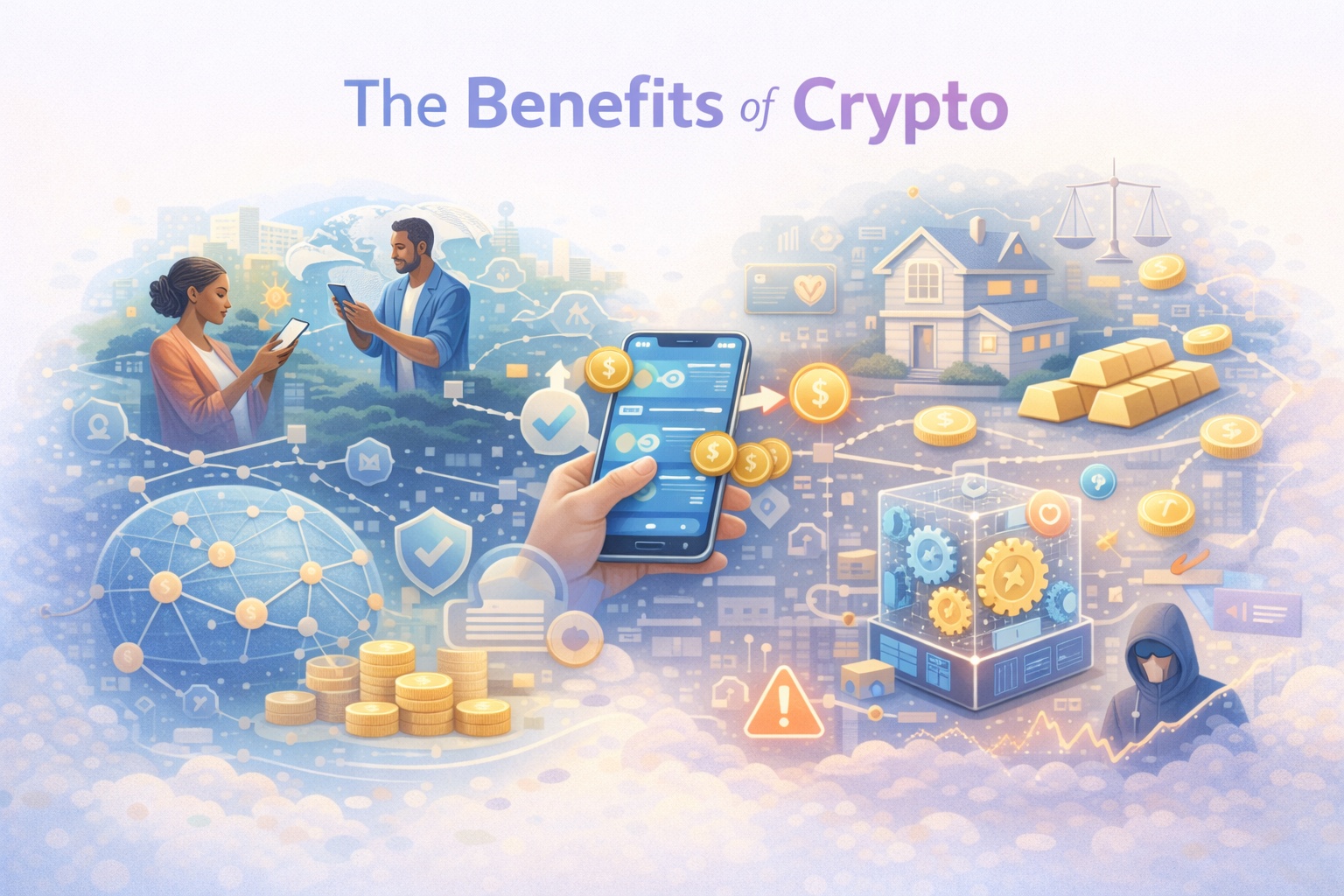
The Benefits of Crypto
Why it’s important to choose a secure crypto wallet?
Lorem ipsum dolor sit amet, consectetur adipiscing elit lobortis arcu enim urna adipiscing praesent velit viverra sit semper lorem eu cursus vel hendrerit elementum morbi curabitur etiam nibh justo, lorem aliquet donec sed sit mi dignissim at ante massa mattis.
- Neque sodales ut etiam sit amet nisl purus non tellus orci ac auctor
- Adipiscing elit ut aliquam purus sit amet viverra suspendisse potent i
- Mauris commodo quis imperdiet massa tincidunt nunc pulvinar
- Adipiscing elit ut aliquam purus sit amet viverra suspendisse potenti
How do I know how secure is my wallet?
Vitae congue eu consequat ac felis placerat vestibulum lectus mauris ultrices cursus sit amet dictum sit amet justo donec enim diam porttitor lacus luctus accumsan tortor posuere praesent tristique magna sit amet purus gravida quis blandit turpis.

Are there any other risks I should take account for?
At risus viverra adipiscing at in tellus integer feugiat nisl pretium fusce id velit ut tortor sagittis orci a scelerisque purus semper eget at lectus urna duis convallis. porta nibh venenatis cras sed felis eget neque laoreet suspendisse interdum consectetur libero id faucibus nisl donec pretium vulputate sapien nec sagittis aliquam nunc lobortis mattis aliquam faucibus purus in.
- Neque sodales ut etiam sit amet nisl purus non tellus orci ac auctor
- Adipiscing elit ut aliquam purus sit amet viverra suspendisse potenti
- Mauris commodo quis imperdiet massa tincidunt nunc pulvinar
- Adipiscing elit ut aliquam purus sit amet viverra suspendisse potenti
“Nisi quis eleifend quam adipiscing vitae aliquet bibendum enim facilisis gravida neque velit euismod in pellentesque massa placerat”
Wrapping up: Crypto is a great wallet for you
Eget lorem dolor sed viverra ipsum nunc aliquet bibendum felis donec et odio pellentesque diam volutpat commodo sed egestas aliquam sem fringilla ut morbi tincidunt augue interdum velit euismod eu tincidunt tortor aliquam nulla facilisi aenean sed adipiscing diam donec adipiscing ut lectus arcu bibendum at varius vel pharetra nibh venenatis cras sed felis eget.
The Benefits of Crypto
“Crypto is often described not only as digital money, but as a new type of digital trust infrastructure.”
Introduction
Cryptocurrency has generated headlines for more than a decade, often associated with rapid price swings, speculation, and high-profile failures. Beneath that volatility, however, many technologists and economists point to a deeper development: blockchain technology.
Blockchain is a form of distributed digital ledger technology in which records are maintained across a network of computers rather than by a single centralized authority. Transactions are verified by the network and recorded in a way that is intended to make later alteration extremely difficult.
In this framework:- Crypto assets function as the value layer- Blockchain operates as the underlying record-keeping system
Understanding this distinction helps explain why many researchers, developers, and institutions are studying the potential uses of blockchain and digital assets beyond speculative trading.
1. Financial Inclusion: Expanding Access
One frequently discussed aspect of digital assets is their potential to expand access to financial tools for individuals who may not participate in traditional banking systems.
Globally, a large number of adults remain unbanked or underbanked, meaning they have limited access to traditional financial institutions. Some blockchain-based systems are designed so that individuals with internet access can interact directly with digital wallets and networks.
In some cases, these systems may allow users to:- Store digital assets- Send and receive payments- Participate in digital marketplaces
However, access can still depend on technology availability, local regulations, and service providers.
Who may benefit:- Individuals in regions with limited banking infrastructure- Migrant workers sending cross-border payments- Entrepreneurs operating in emerging digital markets
2. Transaction Efficiency
Traditional financial transactions often involve multiple intermediaries such as banks, payment processors, and clearinghouses. Each layer can add processing time and cost.
Some blockchain networks are designed to process transactions more directly on the network itself. Depending on the system used, transactions may settle more quickly than some traditional settlement processes.
Potential characteristics include:- Publicly visible transaction records- Automated verification through network consensus- Reduced reliance on centralized reconciliation processes
The actual speed and cost of transactions can vary widely depending on the specific blockchain network and conditions at the time of the transaction.
3. Ownership Transparency and Tokenization
Another frequently discussed concept in the blockchain ecosystem is tokenization.
Tokenization refers to the process of representing ownership of an asset digitally on a blockchain. In theory, various asset classes could be represented this way, including:- Real estate- Art and collectibles- Commodities- Intellectual property
In some proposed models, ownership rights could be divided into digital tokens representing fractional interests.
Advocates suggest that this approach may improve record transparency and enable new forms of asset transfer, though regulatory frameworks and legal structures continue to evolve.
4. Decentralization and System Design
Traditional financial systems rely heavily on centralized institutions. Blockchain networks, by contrast, are typically designed as distributed systems, where multiple independent participants verify transactions.
This design can reduce reliance on a single controlling entity. In some cases, this structure may reduce certain operational risks associated with centralized systems.
However, decentralized systems also introduce new technical, governance, and regulatory challenges, which remain areas of ongoing development.
5. Programmable Digital Infrastructure
One unique characteristic of some blockchain platforms is the ability to create smart contracts.
Smart contracts are software programs stored on a blockchain that are designed to automatically execute predefined instructions once certain conditions are met.
Developers have experimented with building applications such as:- Decentralized financial protocols- Digital asset marketplaces- Governance systems for online communities- Automated payment or licensing systems
Many of these applications remain experimental and continue to evolve as the technology matures.
Where the Industry Appears to Be Exploring Next
While the early years of crypto were heavily influenced by speculative trading, the broader industry conversation increasingly focuses on infrastructure development.
Common themes include:- Institutional research into digital asset technologies- Exploration of real-world asset tokenization- Development of practical use cases such as cross-border payments, digital identity systems, and supply-chain verification
Risks and Uncertainty
A balanced discussion of crypto must also acknowledge ongoing risks and uncertainties.
Some commonly cited risks include:- Market volatility- Cybersecurity threats- Technological vulnerabilities- Regulatory changes across jurisdictions- Project failures or governance challenges
Because the technology is still developing, the long-term role of digital assets in global financial systems remains uncertain.
Conclusion
At its core, cryptocurrency and blockchain technology represent an emerging approach to recording ownership, transferring value, and coordinating digital activity across networks.
Researchers, institutions, and developers continue exploring how these systems might be used in financial services, digital commerce, and record-keeping.
While the technology offers potential advantages in areas such as transparency, automation, and global accessibility, it also presents new technical, economic, and regulatory questions. As with many emerging technologies, its long-term role will likely depend on continued experimentation, regulatory evolution, and real-world implementation.