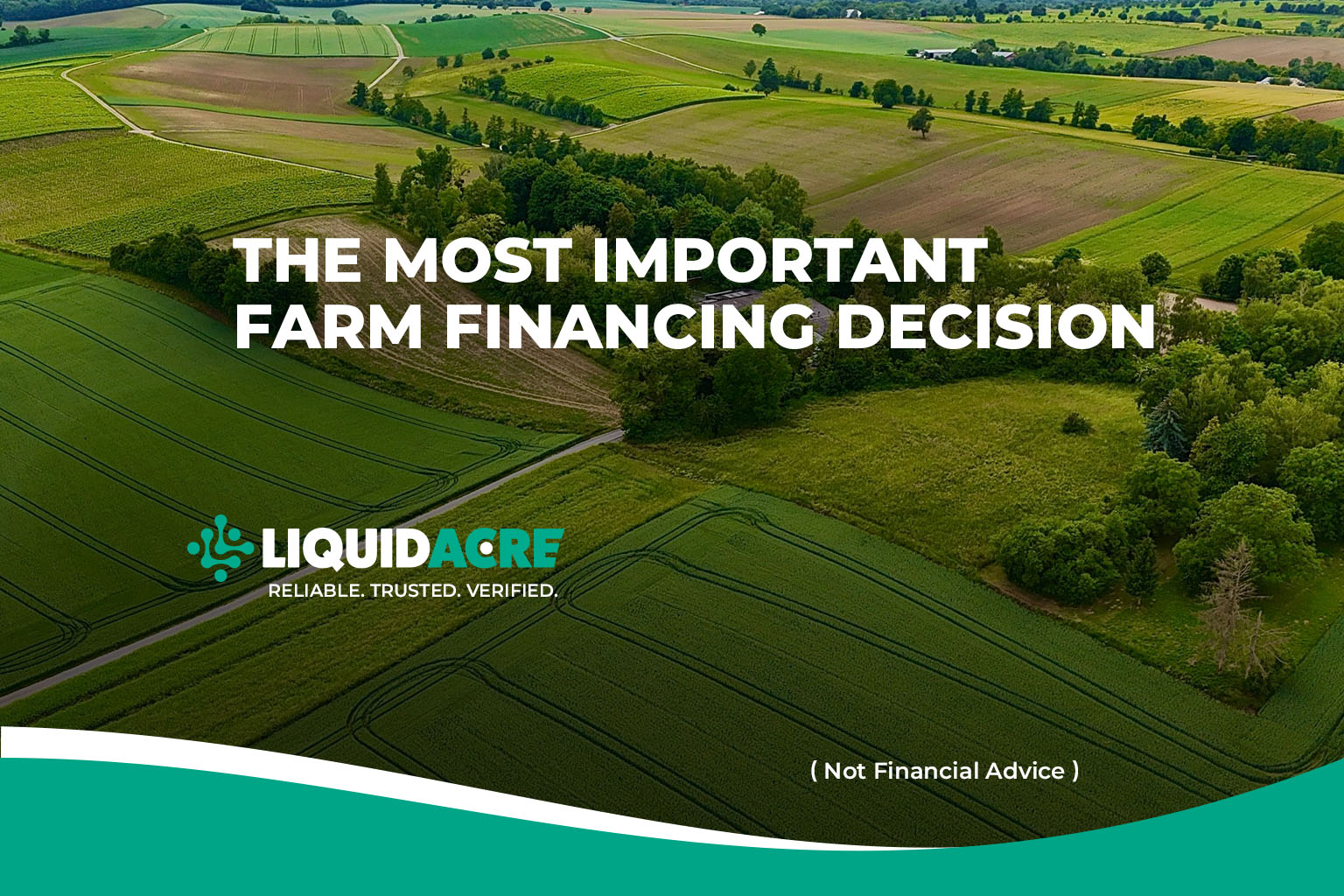
The Most Important Farm Financing Decision
Why it’s important to choose a secure crypto wallet?
Lorem ipsum dolor sit amet, consectetur adipiscing elit lobortis arcu enim urna adipiscing praesent velit viverra sit semper lorem eu cursus vel hendrerit elementum morbi curabitur etiam nibh justo, lorem aliquet donec sed sit mi dignissim at ante massa mattis.
- Neque sodales ut etiam sit amet nisl purus non tellus orci ac auctor
- Adipiscing elit ut aliquam purus sit amet viverra suspendisse potent i
- Mauris commodo quis imperdiet massa tincidunt nunc pulvinar
- Adipiscing elit ut aliquam purus sit amet viverra suspendisse potenti
How do I know how secure is my wallet?
Vitae congue eu consequat ac felis placerat vestibulum lectus mauris ultrices cursus sit amet dictum sit amet justo donec enim diam porttitor lacus luctus accumsan tortor posuere praesent tristique magna sit amet purus gravida quis blandit turpis.

Are there any other risks I should take account for?
At risus viverra adipiscing at in tellus integer feugiat nisl pretium fusce id velit ut tortor sagittis orci a scelerisque purus semper eget at lectus urna duis convallis. porta nibh venenatis cras sed felis eget neque laoreet suspendisse interdum consectetur libero id faucibus nisl donec pretium vulputate sapien nec sagittis aliquam nunc lobortis mattis aliquam faucibus purus in.
- Neque sodales ut etiam sit amet nisl purus non tellus orci ac auctor
- Adipiscing elit ut aliquam purus sit amet viverra suspendisse potenti
- Mauris commodo quis imperdiet massa tincidunt nunc pulvinar
- Adipiscing elit ut aliquam purus sit amet viverra suspendisse potenti
“Nisi quis eleifend quam adipiscing vitae aliquet bibendum enim facilisis gravida neque velit euismod in pellentesque massa placerat”
Wrapping up: Crypto is a great wallet for you
Eget lorem dolor sed viverra ipsum nunc aliquet bibendum felis donec et odio pellentesque diam volutpat commodo sed egestas aliquam sem fringilla ut morbi tincidunt augue interdum velit euismod eu tincidunt tortor aliquam nulla facilisi aenean sed adipiscing diam donec adipiscing ut lectus arcu bibendum at varius vel pharetra nibh venenatis cras sed felis eget.
Why protecting ownership, control, and future value matters as much as raising capital
After more than 25 years advising businesses, I've learned that the best financial decision isn't always the one that puts the most money in your pocket today. Sometimes, it's the one that protects what you've worked a lifetime to build. That lesson is particularly important for American farmers and landowners, many of whom have spent generations building family businesses around their land. When borrowing becomes difficult or operating expenses increase, finding additional capital can become a priority. But I would encourage every landowner to ask a different question:
What am I willing to give up to get the money I need? Every Financing Option Has a Trade-Off
Consider a family that owns 500 acres of farmland and needs additional capital to expand operations or manage existing debt. A traditional bank loan may allow the family to retain ownership and control. However, the loan creates repayment obligations regardless of whether the next harvest is profitable.
Refinancing might improve cash flow, but it can also extend debt obligations or increase total borrowing costs. Selling part of the property provides immediate capital without additional debt. Unfortunately, the family also gives up future income, appreciation, and potentially land that has been owned for generations.
An equity partnership offers another possibility. Outside investors might provide capital in exchange for an ownership or economic interest. Depending on the agreement, the family could retain some ownership and operating involvement while sharing future profits and certain decisions.
The Value of Control
In consulting, I often remind clients that ownership and control are not necessarily the same thing.
You might own the majority of a business but still be restricted by agreements governing major decisions, distributions, or the eventual sale. For landowners, those decisions can affect far more than annual profits. They may determine whether children inherit the property, who manages the operation, and whether the family participates in future appreciation. That's why financing should never be evaluated solely on the amount of money received.
Where LiquidAcre Fits In
LiquidAcre is launching how tokenization could support appropriately structured investment opportunities involving physical assets, including agricultural and development land. Such arrangements may offer additional financing possibilities, but the underlying agreements must clearly define ownership, control, income rights, and exit provisions. Technology doesn't eliminate these responsibilities.
Conclusion: Know What You're Protecting
Before choosing any financing arrangement, I would encourage landowners to identify three things: What must I retain? What am I willing to share? And what could this decision mean for my family ten years from now? Then involve qualified legal, tax, and financial advisors before signing an agreement.
The smartest financing decision isn't necessarily how much capital you raise. It's how much of your future you preserve.
Source: Federal Reserve Bank of Kansas City, Agricultural Credit Survey, November 12, 2026.
Don H. Gleason is a Senior Business Consultant in Orlando, Florida. He may be reached at don@dongleasonconsulting.com.