Can Tokenization Finally Make Real Estate More Accessible and Liquid?
Why it’s important to choose a secure crypto wallet?
Lorem ipsum dolor sit amet, consectetur adipiscing elit lobortis arcu enim urna adipiscing praesent velit viverra sit semper lorem eu cursus vel hendrerit elementum morbi curabitur etiam nibh justo, lorem aliquet donec sed sit mi dignissim at ante massa mattis.
- Neque sodales ut etiam sit amet nisl purus non tellus orci ac auctor
- Adipiscing elit ut aliquam purus sit amet viverra suspendisse potent i
- Mauris commodo quis imperdiet massa tincidunt nunc pulvinar
- Adipiscing elit ut aliquam purus sit amet viverra suspendisse potenti
How do I know how secure is my wallet?
Vitae congue eu consequat ac felis placerat vestibulum lectus mauris ultrices cursus sit amet dictum sit amet justo donec enim diam porttitor lacus luctus accumsan tortor posuere praesent tristique magna sit amet purus gravida quis blandit turpis.

Are there any other risks I should take account for?
At risus viverra adipiscing at in tellus integer feugiat nisl pretium fusce id velit ut tortor sagittis orci a scelerisque purus semper eget at lectus urna duis convallis. porta nibh venenatis cras sed felis eget neque laoreet suspendisse interdum consectetur libero id faucibus nisl donec pretium vulputate sapien nec sagittis aliquam nunc lobortis mattis aliquam faucibus purus in.
- Neque sodales ut etiam sit amet nisl purus non tellus orci ac auctor
- Adipiscing elit ut aliquam purus sit amet viverra suspendisse potenti
- Mauris commodo quis imperdiet massa tincidunt nunc pulvinar
- Adipiscing elit ut aliquam purus sit amet viverra suspendisse potenti
“Nisi quis eleifend quam adipiscing vitae aliquet bibendum enim facilisis gravida neque velit euismod in pellentesque massa placerat”
Wrapping up: Crypto is a great wallet for you
Eget lorem dolor sed viverra ipsum nunc aliquet bibendum felis donec et odio pellentesque diam volutpat commodo sed egestas aliquam sem fringilla ut morbi tincidunt augue interdum velit euismod eu tincidunt tortor aliquam nulla facilisi aenean sed adipiscing diam donec adipiscing ut lectus arcu bibendum at varius vel pharetra nibh venenatis cras sed felis eget.
Why LiquidAcre Sees an Opportunity Beyond Traditional Property Investment
What if investing in a multimillion-dollar property didn’t require
buying the entire building, or waiting years to sell your interest?
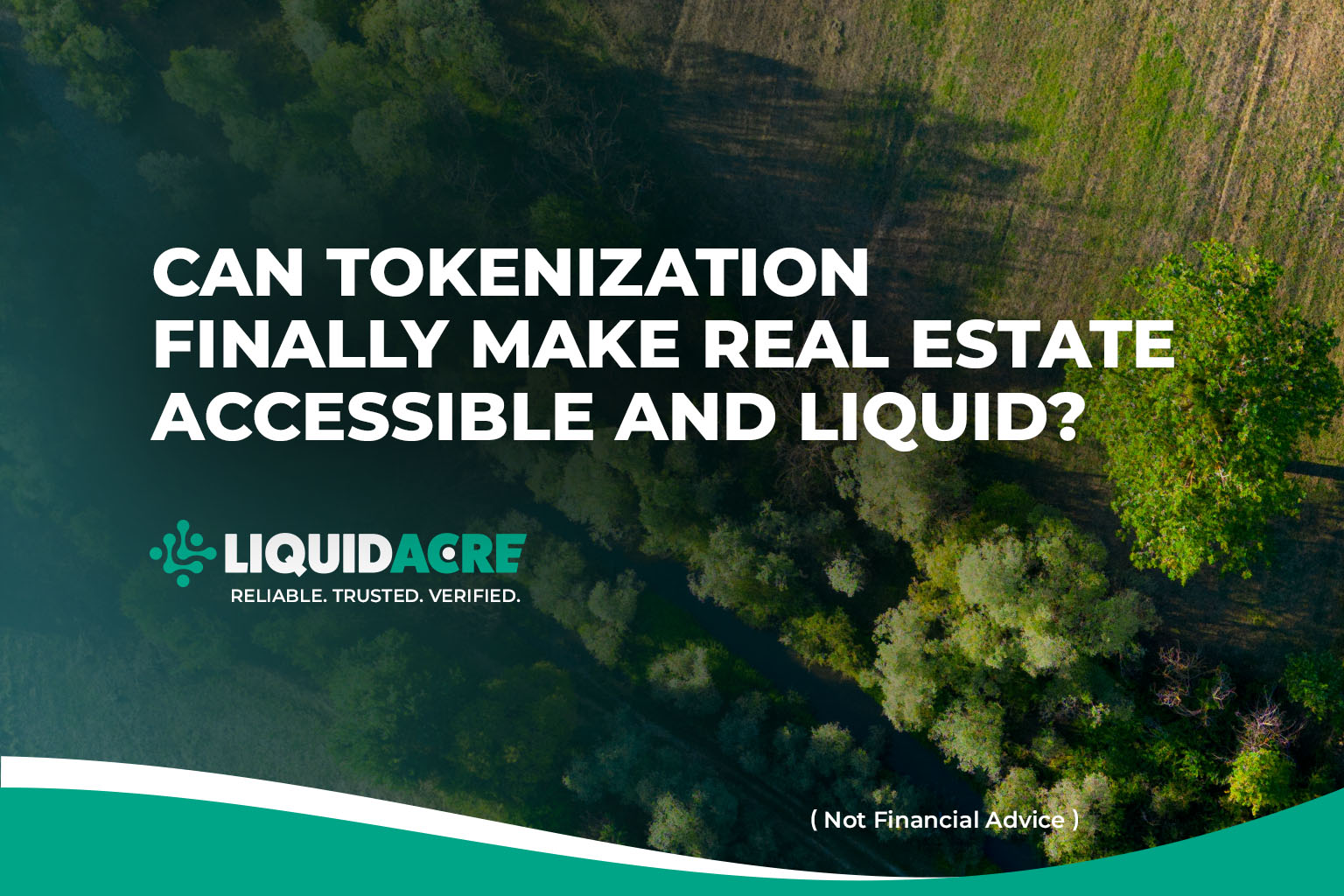
Real estate has always presented an interesting contradiction. It’s one of the world’s most valuable asset classes, yet participating directly often requires substantial capital, complicated transactions, and long investment horizons. Unlike publicly traded stocks, property investments generally cannot be bought or sold with a few clicks. But blockchain technology could begin changing that. A Different Approach to Property Ownership
In a recent Solana podcast, Ricardo Brízido, co-founder and CTO of Stake, explored how tokenization could make real estate investment more accessible, transparent, and potentially liquid. The discussion also highlighted Dubai’s evolving regulatory environment and the technology supporting digital property investments.
The concept is straightforward. Instead of requiring one investor to purchase an entire property, tokenization can represent smaller ownership or economic interests through digital tokens, subject to the investment’s legal structure. That opens an interesting possibility. What if more people could participate in valuable physical assets without having to purchase them outright?
LiquidAcre Sees a Bigger Opportunity
While much of today’s real estate tokenization discussion focuses on residential properties, LiquidAcre envisions applying similar principles across a broader range of real-world assets. Consider apartment communities generating rental income, power plants producing electricity, data centers supporting artificial intelligence, or commercial land being developed. These assets require significant capital and often involve complicated financing arrangements. Properly structured tokenization could create additional financing channels for developers while allowing eligible investors to participate through smaller investment interests.
And importantly, the economic value would come from the underlying asset, not the token itself.
But What About Liquidity?
Here’s where the opportunity becomes particularly interesting. Traditional real estate investments can take months or years to exit. Blockchain technology could simplify ownership transfers and potentially support secondary markets. However, creating a digital token doesn’t automatically create buyers, liquidity, or investment returns. Property rights, securities regulations, investor qualifications, and market demand still matter.
Conclusion: Beyond the Property
LiquidAcre’s vision is about more than digitizing ownership records. It’s about exploring how physical assets might connect with a broader, more efficient financial ecosystem. The future of tokenization may not be about changing what we invest in. It may be about expanding how we participate in the real-world assets that power our economy.
Source: Solana, Solana Is Global with Alex Scott, “How Tokenized Real Estate Could Finally Become Liquid,” featuring Ricardo Brízido, Co-Founder and CTO of Stake, October 27, 2026.
Original podcast: https://solana.com/podcasts/solana-is-global-with-alex-scott/episodes/how-tokenized-real-estate-could-finally-become-liquid-e3r6ckf